


Why the Shacman truck resonates in Africa
Operators in Africa prize trucks that survive heavy loads, high ambient temperatures, dusty environments and long distances between service stops. Leading Shacman models (X3000, L3000 and others) have been engineered with heavy-duty drivetrains, strong suspensions, and cooling packages specifically tuned to prevent overheating in hot, high-load conditions — precisely the feature set needed on rough mine roads and long, hot construction hauls. Independent operator accounts and Shacman’s regional reports both emphasize strong torque delivery and cooling reliability as reasons customers stick with the brand.
One of the fastest ways to convert a cost-focused sale into a repeat customer is to make parts and service fast and predictable. Shacman has taken steps to establish assembly plants and regional distributors (for example, operations and assembly support in Algeria and a commercial presence in South Africa), which reduces lead times for parts and brings down downtime — a huge advantage in markets where delays directly impact revenues. This local footprint signals commitment to the market and builds trust among fleet managers.
Recent export numbers and company reports show Shacman capturing a substantial share of China’s heavy-duty truck exports and rapidly increasing overseas orders. Scale matters: higher export volumes improve parts availability, encourage third-party support ecosystems (local bodybuilders, mechanics, used-truck traders), and reduce unit cost for buyers. For African buyers, the practical result is lower purchase price and easier long-run ownership.
Shacman offers a broad lineup (tractors, tippers/dumpers, mixers, tankers and specialty chassis) and is often willing to customize chassis and bodies for local customers — from reinforced frames for mining to adapted cooling systems for high-temperature operations. This flexibility matters when a contractor needs a truck configured for a specific load or road condition.
Why the HOWO truck (Sinotruk) is also a go-to choice
While Shacman has made important inroads, the HOWO truck (a major Sinotruk product line) represents the other side of China’s heavy-truck success in Africa. HOWO’s popularity rests on complementary strengths:
HOWO trucks are frequently cited for solid build quality, efficient engines and reasonable fuel economy — all factors that lower TCO for fleet operators. Many buyers choose HOWO because an acquisition price that is typically lower than European rivals, combined with lower fuel and maintenance costs, produces a fast payback on capital. Market materials and dealer write-ups commonly highlight HOWO’s mix of durability and economy as reasons for adoption.
Sinotruk’s global distribution and large installed base mean spare parts are commonly available, and a robust used-HOWO market exists. For smaller logistics firms that must rely on local mechanics and parts shops, this accessibility is decisive — operators know they can get a reasonably priced replacement axle, gearbox part or cab component within days rather than weeks.
HOWO variants — especially the 6×4 dump and tractor configurations — have been widely used in mining, roadworks and regional freight. Dealers and customers often report the brand’s tolerance to heavy loading and rugged roads, which further reinforces confidence among new buyers.
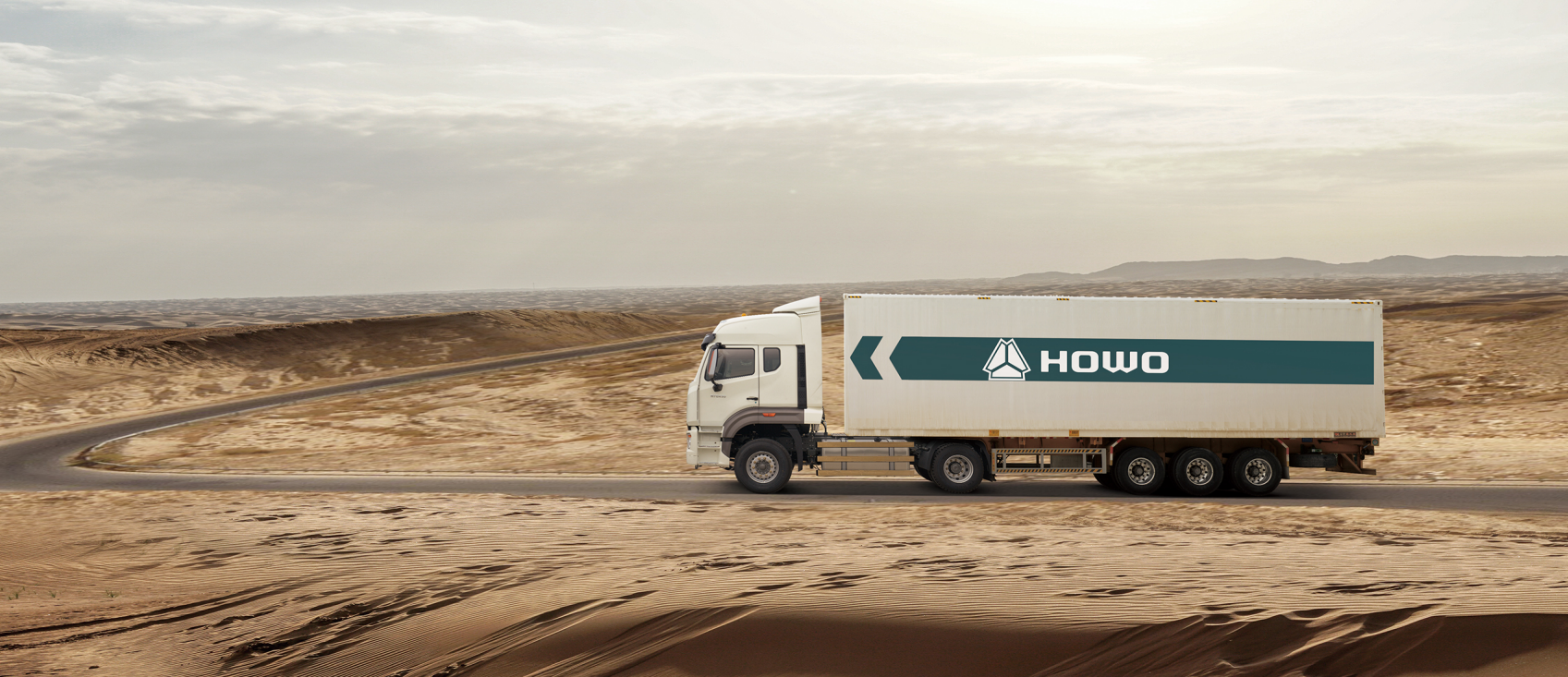
Concrete market signals and numbers
A few concrete signals illustrate the broader trend:
Shacman export growth and market share: Company and industry reports show Shacman registering tens of thousands of exports in recent years and claiming a leading share of Chinese heavy-truck exports. For example, Shacman reported strong overseas order growth and multi-year export records in the early 2020s. Such scale translates into availability and visibility on the ground.
Regional assembly and dealer networks: Shacman Africa’s established presence in Johannesburg and reports of assembly/assembly-partner operations in Algeria signal an evolving strategy from one-time exports to sustained after-sales investment. That presence materially reduces downtime for fleet customers.
HOWO market penetration: HOWO (Sinotruk) continues to be marketed aggressively across African countries with a variety of locally relevant models (mixers, dumpers, tractors) and price points; industry write-ups show HOWO commonly listed among best-selling Chinese truck lines in markets like South Africa, Ghana and others.